

The Edmonton Indian Residential School holds a dark but significant place in the history of Canada’s education system and the Indigenous peoples of Alberta. For many years, children from various communities were sent here, and the school itself became a lasting part of the country’s historical legacy. Today, the site is home to the Nechi Institute’s Centre of Indigenous Learning, which actively supports the cultural and educational development of Indigenous peoples. To learn more about the history and the realities of life at the Edmonton Indian Residential School, read on at edmonton1.one.
The School’s Opening and the Policy of Indigenous Assimilation
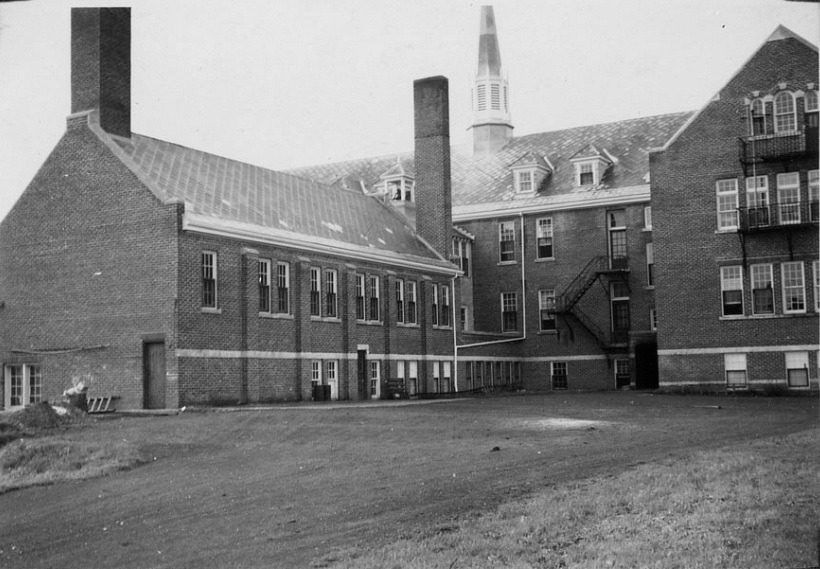
The Edmonton Indian Residential School officially opened its doors on October 23, 1924. Although students had already been arriving at the Methodist-run facility for several months, the church still insisted on hosting a grand ceremony. The building’s construction was more expensive than any other at the time, and the church wanted to showcase its investment. The public was invited, and many Edmonton residents attended. Charles Stewart, a former Premier of Alberta who was serving as the Minister of the Interior and Superintendent General of Indian Affairs in the Liberal government, addressed the crowd. He explained that the government was dissatisfied with the status of Indigenous peoples in the Dominion. According to Stewart, they needed “education” to assimilate into Canadian society, which meant the drastic erasure of the Indigenous way of life. William Morris Graham, the Indian Commissioner for the Western Region, agreed, stating that the “Indian problem” could not be solved without such schools.
The primary goal of the residential school system was to forcefully prepare Indigenous children for life in modern Canada. At the time, officials believed that instilling Anglo-Canadian values at an early age would elevate the children to the level of “civilized” Canadians. They thought practical skills and hard labour would make them productive members of society. Furthermore, agricultural training played a massive role in this scheme. This idea was heavily promoted by Vital Grandin, the Bishop of St. Albert. Convinced that Indigenous peoples were on the brink of extinction, he placed his hopes on education and converting the children to Christianity. At the Edmonton school, boys were put to work on an 8-acre field. Meanwhile, girls were assigned to cook and set tables in the kitchen. The children were taught various types of farm labour, from working the land to caring for livestock. The underlying hope was that this technical training would help young Indigenous people find ordinary jobs. However, the practical training was incredibly poor and often useless. Students were rarely taught by qualified professionals; instead, priest-teachers took on this role with little to no expertise.
According to historian Paolo Di Mascio, this system ultimately stripped children of their identity. It guaranteed that any attempt to reintegrate into their families and communities would fail. This deliberate destruction of psychological and interpersonal identity was rooted in racist ideologies and a blatant disregard for Indigenous culture, knowledge, and values. As a result, the children became strangers in their own communities. Cutting the children’s hair was just one method used to achieve this goal. Teaching students to be “Canadian” wasn’t just about farming or reading; it was about forcing them to look the part.
Living Conditions, Education, and the Ban on Indigenous Languages
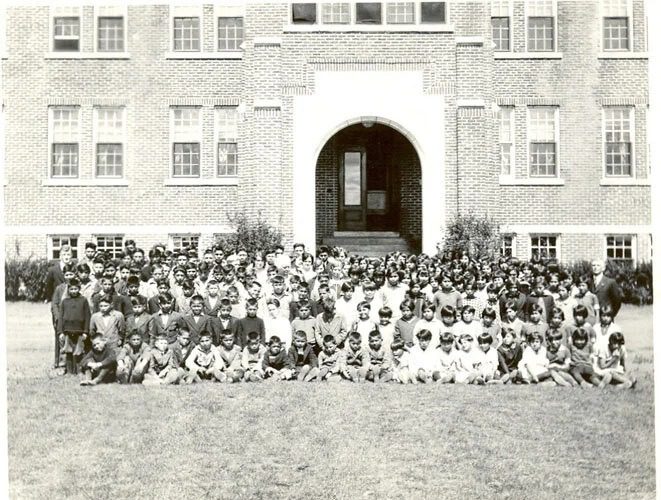
For a long time, speaking Cree, Dakota, Ojibwe, and other Indigenous languages was strictly banned in residential schools. In 1945, Reverend Cantelon from Edmonton’s McDougall United Church was appointed dean of the boys’ dormitory. Although he was fluent in Cree, he was absolutely forbidden from speaking to the students in their native language. Harold Woodsworth, son of Principal Joseph F. Woodsworth, dismissed criticisms of this rule. He argued that the ban was purely pragmatic. According to him, the languages were banned not because English was superior, but because the students belonged to five different language groups. Teachers who disagreed with these methods were free to leave. That’s exactly what happened to Mr. McIlwraith, a Grade 7, 8, and 9 teacher at the Edmonton Indian Residential School in the late 1950s. During his time there, he openly criticized the school’s outdated materials, methods, and goals. This ultimately led to a clash with Principal Oliver Strapp.
Parents constantly complained that their children weren’t learning anything useful. Soon, the school struggled to retain its students. In October 1931, Indian Agent G.C. Mortimer reported that he had a very hard time forcing students to return from the Kitwancool reserve in British Columbia. By law, he was required to do so. A 1920 amendment to the Indian Act made residential school attendance mandatory for all Indigenous children. Fortunately, some families found ways around the system. For example, in 1941, three sisters stayed home at the insistence of their mother, Isabelle Steinhauer. They had learned so little during their time in Edmonton that she decided to homeschool them using correspondence courses from the Alberta Department of Education.
The School’s Closure and Its Significance in Alberta’s Indigenous History
Most children, however, were trapped. Officially, Edmonton was meant to be a school for Cree children from the Maskwacis (formerly Hobbema) reserves. In reality, many students were brought in from remote areas of British Columbia and the Yukon. The children were forced to live in appalling conditions. In April 1924, Indian Commissioner W.M. Graham called the water system at the newly opened Edmonton school an “absolute failure.” It only supplied half of the school’s actual needs. In May 1925, a fire destroyed most of the school’s utility building and laundry. At the time, Principal Woodsworth claimed that the Edmonton Fire Department had saved the entire institution from burning to the ground.
Later in 1925, Principal J.F. Woodsworth reported to Ottawa that the roof of the recently renovated United Church school was leaking heavily during the rain. Beds in the girls’ dormitory were soaked, water buckets in the teachers’ rooms filled up instantly, and furniture was drenched. The windows were so poorly made and installed that the wind blew straight through them all winter. This made some rooms practically uninhabitable, even with the fireplaces burning constantly. The general decay of the residential school system’s facilities continued through the late 1950s and into the 1960s. After inspecting the Edmonton school in 1957, W.E. Frame, the new Inspector of Indian Schools, was appalled. He wrote that since joining the Department of Indian Affairs, he was shocked to see that Indigenous students’ educational facilities were vastly inferior to the province’s public schools. Indian school buildings and additions seemed to have been thrown together in a rush just to meet immediate needs. He noted that the Edmonton residential school was in terrible shape. Building repairs and maintenance had been delayed for so long that only a complete and thorough overhaul could make the facility acceptable.
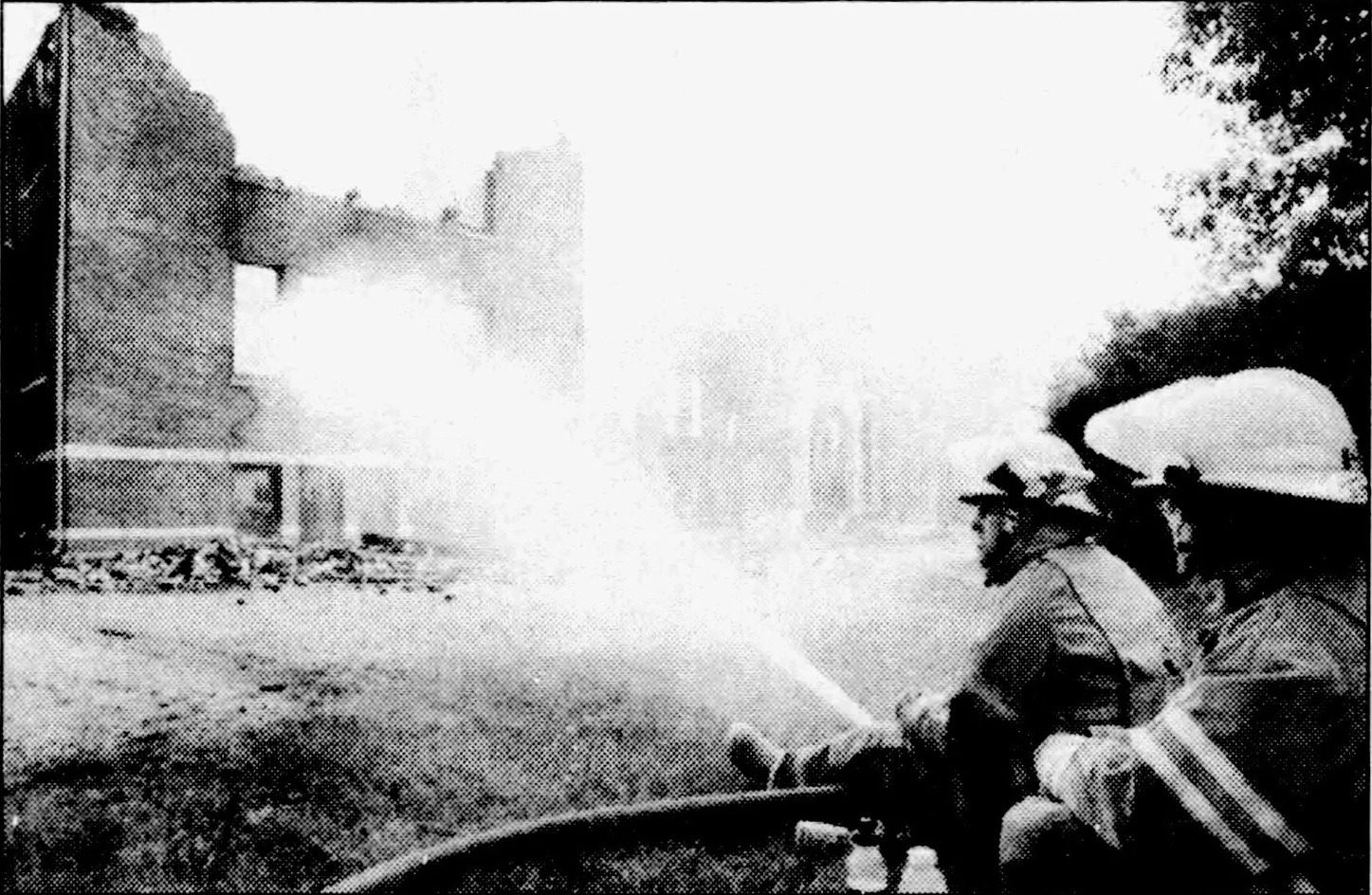
The Edmonton Indian Residential School never recovered. Three years later, a student riot broke out, and the institution was unceremoniously shut down on June 30, 1968. Thirty-two years later, the abandoned building was completely destroyed by an arson fire.