

By 1914, widespread unemployment had become the norm in Edmonton. This followed the completion of the railway and a decrease in the need for extensive agricultural labour due to mechanization. Soon after, chaos erupted across the province, triggering a wave of worker strikes, as reported by edmonton1.one.
The Root of the Unrest: Injustice
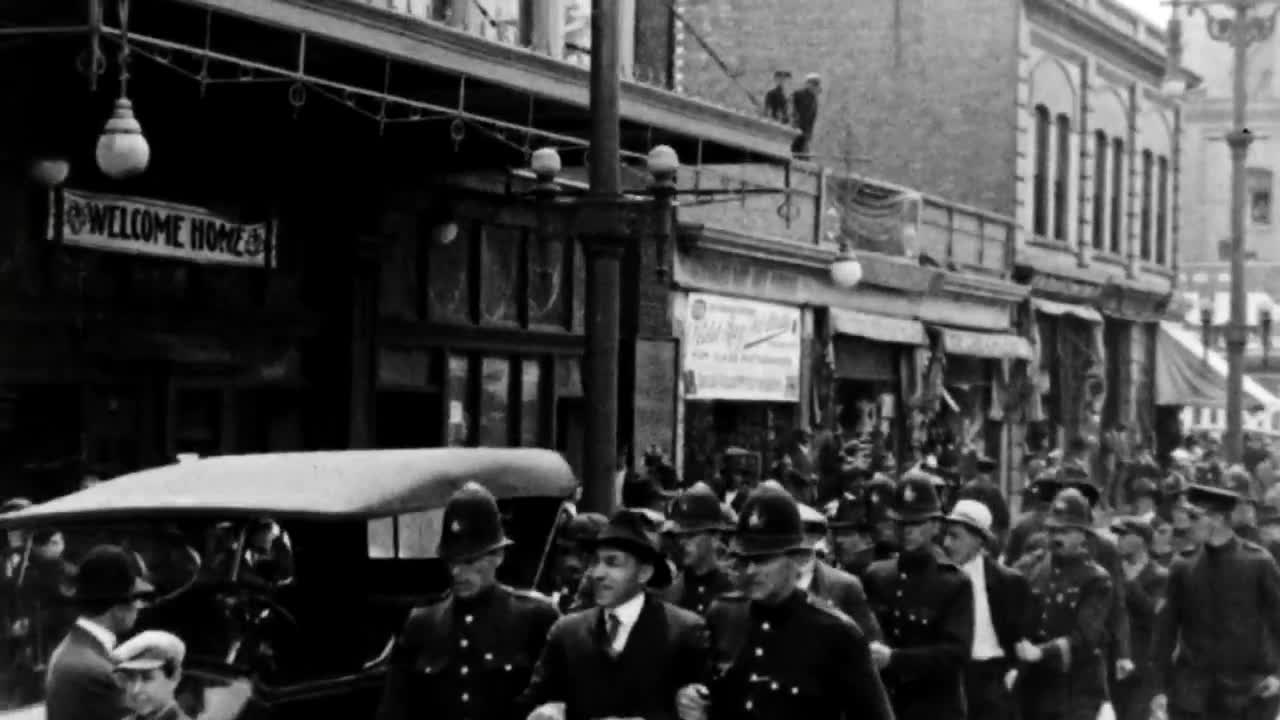
At the time, the press was fixated on the armistice with Germany. Editorials and front-page stories lambasted the Bolshevik Revolution in Russia, condemning radical unions and foreign workers who sympathized with Bolshevik ideals. The government and educators concluded that deporting foreigners, particularly Mennonites and radicals from the Industrial Workers of the World (IWW), was the solution.
The Mathers Royal Commission on Industrial Relations travelled across Canada, striving to comprehend the unprecedented series of strikes that stretched from Nova Scotia to Victoria. Many strikes were brief, but as soon as one ended, another would begin. They impacted every industry and segment of society. Miners went on strike in Nova Scotia, while streetcar workers walked off the job in Toronto and Windsor. Even housemaids went on strike for a week. The core demands were largely consistent: workers sought an 8-hour workday, one day off per week, and recognition of their unions.
When the commission visited Edmonton, Alfred Farmilo of the E.T.& L.C. and Reverend F.W. Mercer (who authored a labour article for the Edmonton Journal), alongside then-Mayor Joseph Clarke, represented the workers’ interests. They presented 29 grievances to the commission, including demands to combat profiteering, condemn unemployment, establish an 8-hour workday, implement price controls, and secure the right for workers to run for and hold public office.
A Clash of Unions
In Alberta, a fierce struggle unfolded between the craft unions, representing the American Federation of Labor (AFL), and the fledgling industrial union, the One Big Union (OBU), championed by the Edmonton Trades and Labour Council (ET&LC). The British Columbia Federation of Labor threw its support behind the industrial unionism promoted by the OBU. This led to a call for a Western Canadian Labour Conference in Calgary in early May, aiming to formally establish the OBU and break away from the AFL and its international unions.
On April 28, the weekly general meeting of the Edmonton Trades and Labour Council debated supporting the OBU. Amidst procedural maneuvering, Alfred Farmilo proposed expelling all delegates from the OBU, accusing them of dual membership and seeking to secede from international unions.
Farmilo’s motion wasn’t put to a vote, but it gained support from the chairs, and the delegates were nonetheless expelled. This sparked heated debate that nearly escalated into a brawl. Delegates from local unions supporting the OBU and the Calgary confederation were disenfranchised. Most ET&LC members, including representatives from the carpenters’ union, railway workers, engineers, and others, walked out of the meeting.
The attempt to purge Edmonton’s OBU delegates made front-page news in the “Edmonton Journal” and “Bulletin.” This political struggle for control of the Trades and Labour Council became a full-blown storm. Despite its dominance in Edmonton, the OBU managed to garner support across Western Canada. OBU supporters, who had been expelled from the union, attended subsequent ET&LC meetings, attempting to overturn the previous week’s decision, but their efforts were unsuccessful.
Authority Supports the Strike
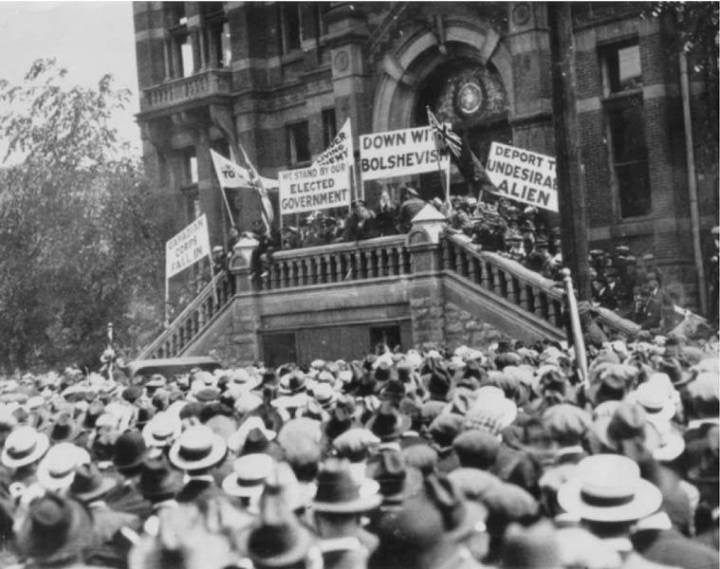
On May 13-14, newspapers were buzzing with news of the impending strike in Winnipeg. Unlike other regions in Canada, the OBU movement was strongest in Winnipeg. This led to Manitoban unions refusing to speak with the Mathers Royal Commission when it visited the province just days before the strike was called.
By May 15, Winnipeg workers declared a general strike, bringing the city’s operations to a halt. The issues remained the same: an 8-hour workday, a 16-day work week (presumably meaning a 6-day work week with 16 days off per month, though often used colloquially to mean a two-week cycle with a weekend off), and recognition of the OBU as a bargaining agent. The strike caused a complete shutdown of vital shipping and transportation links between Eastern and Western Canada, effectively isolating the West.
Despite the earlier dispute over delegate status, all Edmonton unions reacted swiftly to the Winnipeg general strike. The ET&LC urged workers to strike in solidarity. This led to the Edmonton Trades and Labour Council calling an emergency meeting of all city unions on May 21.
At the meeting, two resolutions were unanimously adopted. The first was to hold a city-wide vote among all unions and declare a strike for May 26. The second was the immediate formation of a strike committee, composed of two delegates from each union. The vote on whether to strike in Edmonton took place on May 25.
The “Bulletin” newspaper reported that Edmonton workers had good relations with their employers, with their interests represented by international unions. Moreover, aldermen assumed that, following the recent turmoil within the Edmonton Trades and Labour Council, they could fully rely on union leadership.
Mayor Clarke noted that council members were ignoring the truth. Solidarity strikes were occurring in cities across the West, and workers were determined to uphold the right to union recognition and collective bargaining. He blamed profiteers who refused to recognize unions and laid off their employees, and informed city council members that he would not resort to using the police to suppress the strike, nor would the city approve the use of strikebreakers, as recommended by council member Grant.
The council disregarded the words of the mayor and the strike committee, assuring themselves that Edmonton’s honest and respectable workers would not strike. By Sunday, the turnout for the strike vote was overwhelming. Thirty-nine of 45 unions voted, with the majority casting their ballots in favour of a strike in Edmonton.
The Great Strike
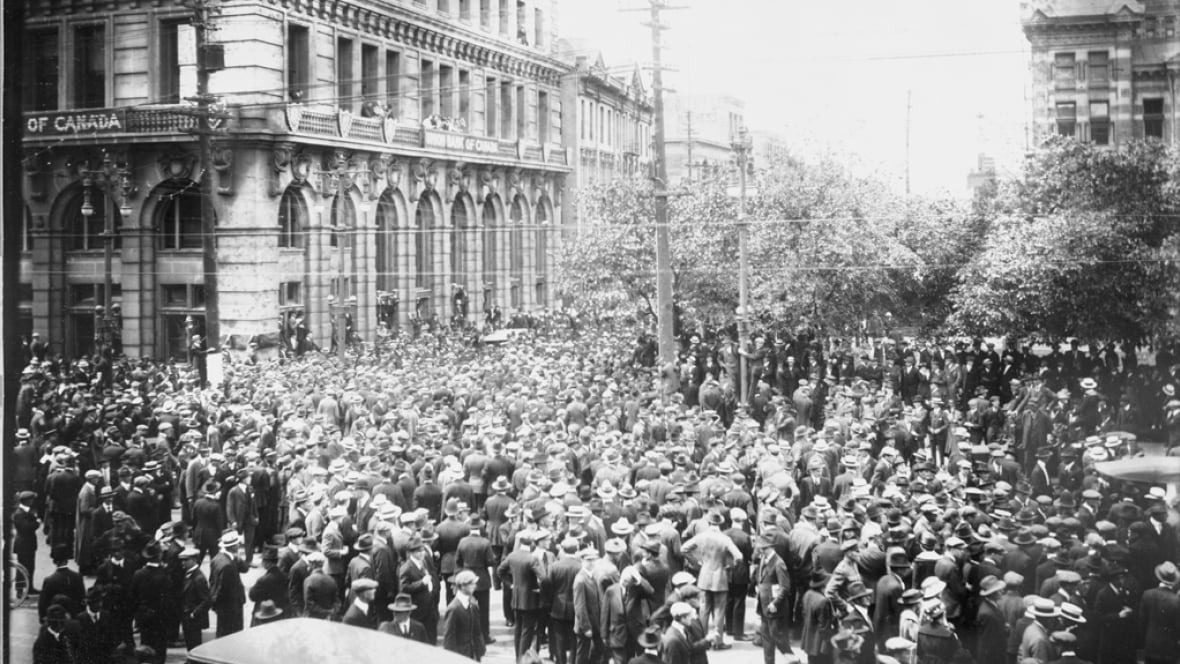
Consequently, on Monday, May 26, city residents discovered that streetcars and taxis were not operating, and City Hall was closed. Police and fire patrols were reduced, the telegraph network was down, and trains had stopped running. Restaurant staff walked off the job, and strikers forcibly closed stores. Milk was delivered to homes, but cheese and butter were impossible to buy. City utilities also failed to report for work; streetlights were turned off early, and packing plants and cold storage facilities were left without electricity or workers.
The strike committee, formed by the unions, now effectively ran the city, much to the chagrin of business owners and some city council members. Mayor Joseph Clarke negotiated with the strikers, offering to provide essential services. In return, the strikers declared they would continue their protest until the situation was resolved in Winnipeg.
City authorities hoped the rallies would end in a few days, but the situation was so dire that they dragged on for a long time.
Veterans returning from the war faced complete unemployment and a lack of government assistance. The city committee began urging them to form police squads to force strikers back to work. Unions demanded full compensation for veterans and the creation of additional jobs. The Great War Veterans Association (GWVA) passed a resolution stating they would not interfere with the strike.
Edmonton was in chaos; people rose up, and new strikes were declared daily. Coal miners and railway workers held independent rallies, expressing their dissatisfaction with wages and working hours. Steelworkers across Canada struck for the same reasons. This led to less coal being supplied to the city, further strengthening the strike committee’s influence. Coal remained unmined, and already-prepared coal was not delivered but sat in idle cars on sidings outside the city.
The situation escalated further when postal workers were locked out by the federal government and when violence was used to suppress the strike in Winnipeg. Edmonton workers relentlessly held mass rallies in Market Square, condemning government actions and calling on employers to treat workers fairly.
The strike in Edmonton lasted one month and one day. However, even after its conclusion, the city barely returned to normal. Restrictions on deliveries, lighting, and streetcar operations remained, and few stores reopened.
True to their word, Edmonton’s unions supported their Winnipeg counterparts until the very end. They proved to everyone that they could effectively run the city, despite opposition. Joseph Clarke became a casualty of the strike, losing his mayoral re-election bid due to his support for the workers. The 1919 strike forever entered Canadian history, as it led to successes in collective bargaining and union recognition. The 8-hour workday and the 16-day work week became the norm. Importantly, the modern Canadian industrial and social union movement was born from the struggles of 1919.