

Marion Nicoll stands as a pivotal figure in Alberta’s art history, recognized as one of its pioneering abstract artists. In Calgary’s predominantly male and somewhat isolated 20th-century art scene, she broke barriers, teaching art at a post-secondary institution. In 1970, Nicoll achieved another milestone, becoming the first woman from the Prairies to be inducted into the Royal Canadian Academy of Arts. Despite the societal constraints she faced, her impact on Canada’s cultural landscape remains indelible, as reported by edmonton1.one.
Early Life and Youth
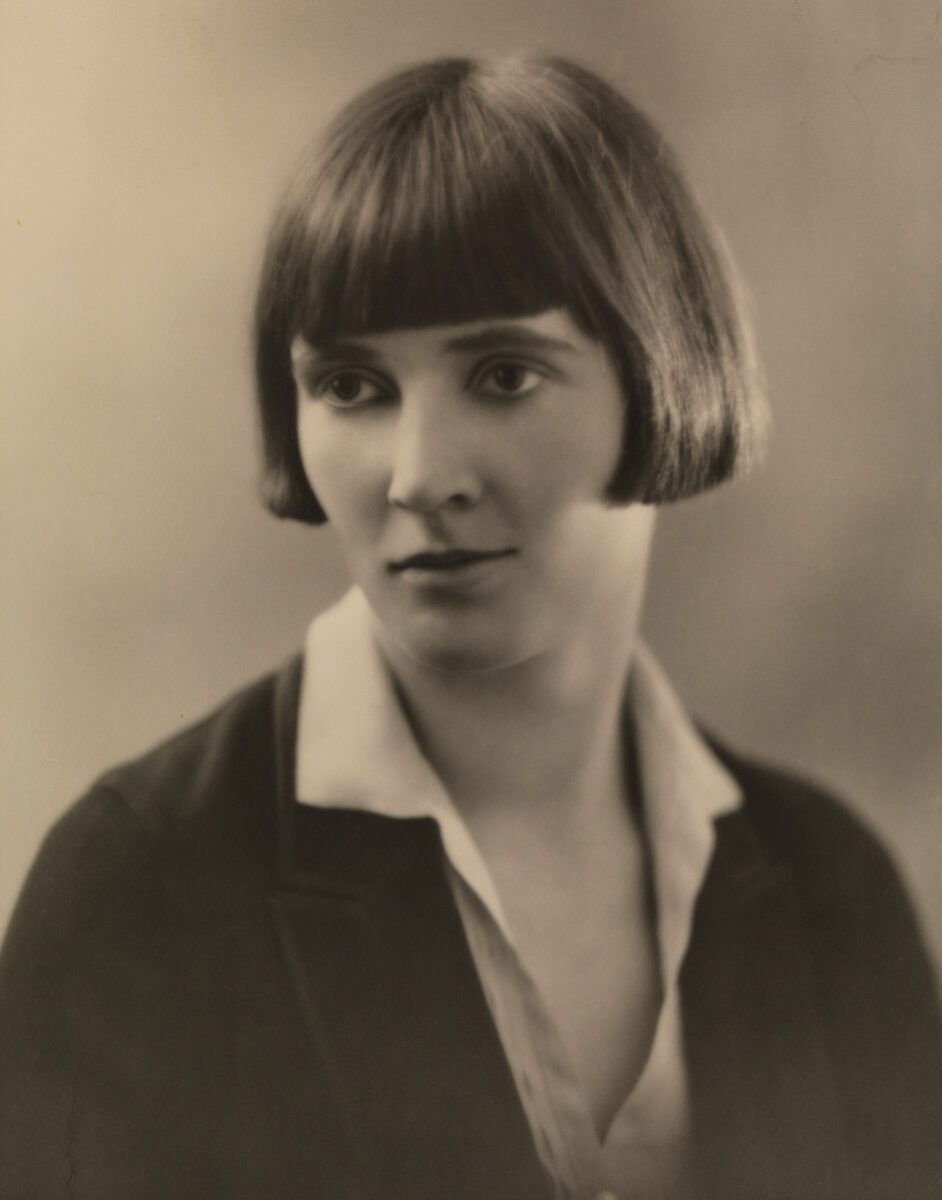
Born Marion MacKay on April 11, 1909, she was a first-generation Canadian, the daughter of immigrants Robert and Florence. The family was middle-class and Presbyterian, adhering to a traditional structure where the husband was the breadwinner and the wife the homemaker. Her father served as Calgary’s first superintendent of electric light and power, and also as the assistant manager of the annual exhibition and rodeo. Florence gave birth to four children, but only Marion survived. Her mother doted on her only child, encouraging her to stay close to home. From a young age, Marion showed a keen interest in art, beginning to draw on books, walls, and anything else she could find by the age of five. Determined even at 13, she convinced her parents to set up an art studio for her in the basement. Her mother, frankly, wasn’t thrilled with her daughter’s artistic pursuits and tried to persuade her to study home economics, but Marion held her ground.
At Central High School, MacKay’s first art teacher was Reginald Harvey, a British landscape artist who encouraged her artistic pursuits. Her family, despite initial reservations from her father about the financial viability of an art career, began to support their only daughter. In 1926, Marion enrolled at the Ontario College of Art in Toronto (now OCAD University), where she studied under portrait artist John Alfsen. In 1928, she returned home to visit her parents, but her mother, citing anemia, forbade her from returning to Toronto. Marion had no choice but to transfer to the Provincial Institute of Technology and Art (PITA) in Calgary. There, she studied drawing with British artist Alfred Leighton, whose summer landscape painting courses led to the creation of what is now known as the Banff Centre for Arts and Creativity. Leighton, initially unsure of MacKay’s technical skills, placed her in the first year of the program to improve her understanding of colour. However, within months, she was moved to the third year. In 1933, she was appointed a student instructor, and by 1935, she became an instructor.
During her studies, Marion encountered the work of West Coast artist Emily Carr. Carr’s paintings were brought to PITA for an exhibition, but the administration refused to display them, deeming them too modern. Leighton led his students into the locked storeroom where the works were kept, and they took turns taking out the canvases. Carr’s paintings depicted Indigenous communities of British Columbia and coastal landscapes, employing a new modernist language of expressive brushstrokes and vibrant colours. She quickly became one of Marion’s favourite artists. The censorship of Carr’s work reflected some of the philistine and gendered views on art and women that persisted in Calgary, as well as the systemic barriers Marion herself faced. Calgary’s visual arts infrastructure was only just beginning to develop; there was no municipal art gallery yet, and the cultural community was male-dominated.
Early Career and Family Life
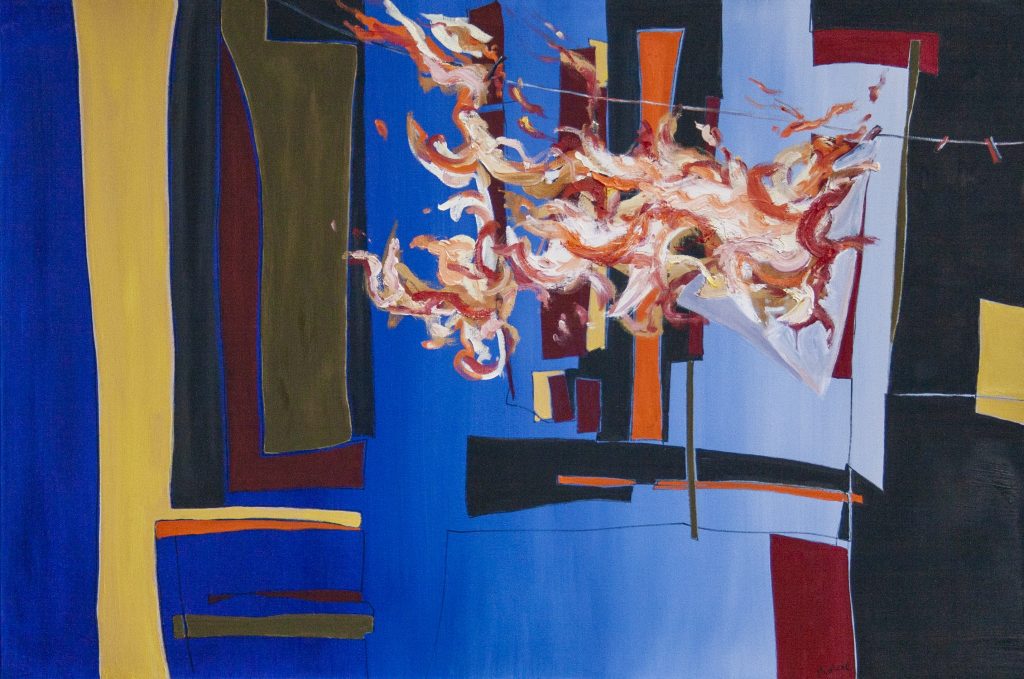
After completing her studies at the Provincial Institute of Technology and Art, Marion participated in Leighton’s outdoor summer courses in Sibbald. During this period, she created naturalistic compositions such as “Flowers, Vase, Books, and Porcelain” and “Summer Rain.”
In 1931, at the Calgary Sketch Club, Marion met fellow artist Jim Nicoll, who shared her passion for art and poetry. After graduating from the University of Alberta’s civil engineering program in 1924, he made a living as a surveyor, and his drafting skills influenced his naturalistic aesthetic. They married in 1940. Jim was 17 years older than Marion, but this did not hinder their feelings. Their family life proved challenging, as Jim’s work with oil companies meant constant travel across Canada, leaving him away from home for months at a time. He expressed his affection for his wife in the painting “Portrait of Marion,” depicting her at 26 years old.
In 1931, Marion’s teachers, Leighton and Harvey, founded the Alberta Society of Artists, aiming to promote fine arts through its members, exhibitions, and clubs. In 1936, Marion was elected as a prominent member. In 1935, she joined the Women Sketch Hunters of Alberta, a group of 10 women who often gathered and challenged male control over exhibitions.
In 1936, Marion’s confidence grew when her painting “Mountain Water” was accepted into the Exhibition of Contemporary Canadian Painting at the National Gallery of Canada, which then toured South Africa, Australia, and other countries. When the work was presented in Toronto at the Canadian National Exhibition in 1939, one critic remarked that it successfully conveyed the sensation of a turbulent stream rushing among rocks.
In 1935, Marion was appointed an instructor of craft and design at PITA. Simultaneously, she began studying at the Central School of Arts and Crafts in London, where she strengthened her skills in decorative arts. Notably, Marion’s European sketchbooks include drawings of places she visited, as well as ancient ceramics.
In the winter of 1937, her mother passed away, but at her father’s insistence, Marion remained in London to complete her studies. In June 1938, she returned to Canada and resumed teaching at PITA in the fall. Thanks to her new skills, the technical programs expanded to include fabric decorating, batik, leatherwork, and silk-screening.
Experiments and Teaching Career
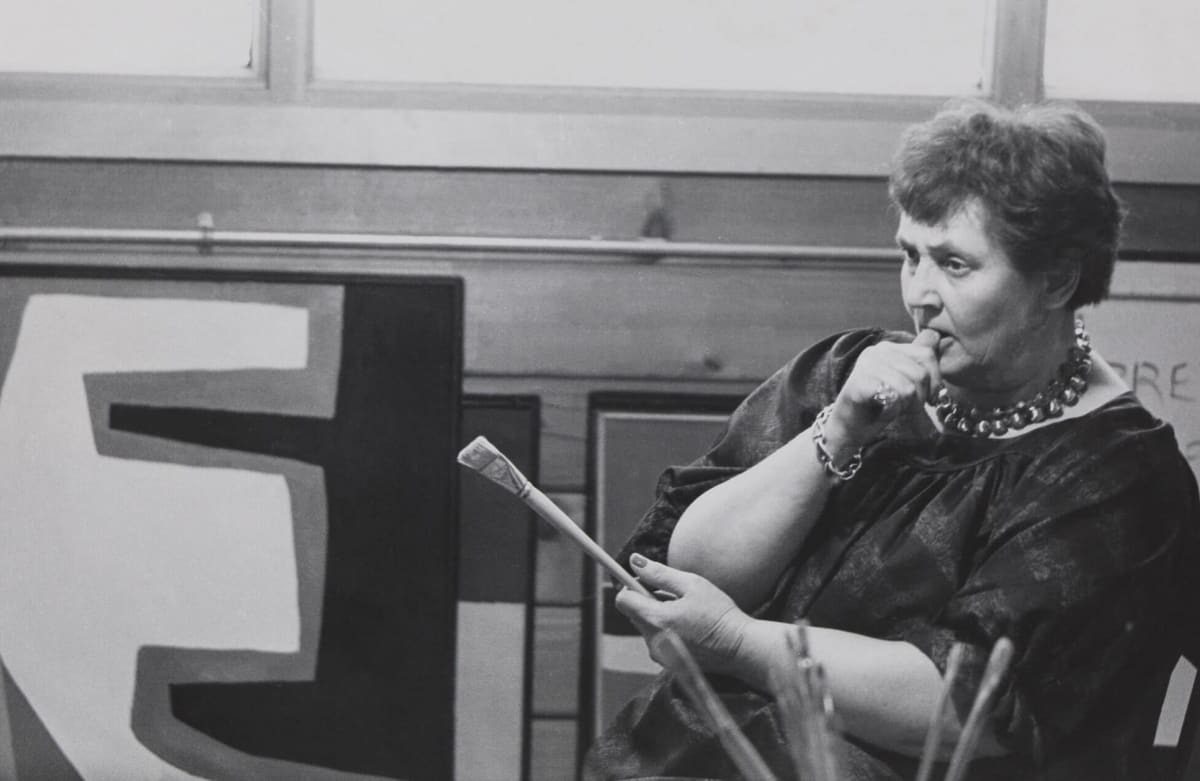
In 1946, Marion was hired for the Banff School of Fine Arts summer program, becoming its only female instructor. Among her colleagues was John MacDonald, who had recently been appointed head of the art department at the Provincial Institute of Technology and Art. It was likely under his guidance that Nicoll joined as an instructor in the School of Crafts. This position played a crucial role in her work during the 1950s, when she became known for her classes in design, printmaking, and textile art. Nicoll created incredibly beautiful brooches, pendants, earrings, and rings, which were featured in travelling exhibitions.
In 1947, Marion was introduced to automatism, a technique practiced by European surrealists. Working automatically involved allowing the hand, pencil, or brushes to move without conscious intent. Nicoll was so inspired that over the next six years, she created sketchbooks four feet high. In her work, the artist employed two stages: first, she tapped into her imagination, then translated the images into paintings and drawings. Nicoll’s few landscapes in the 1950s are not mere recordings of nature, but rather an intensification of mood and imagination. In “In Badlands, Eladesor” (1953), a flock of birds flies from a dark sky into a desolate, arid landscape. The sombre painting “Graveyard and Hoodoos” (1955) contrasts the transience of life with the power of nature, expressed in ancient, time-worn stone pillars. The work “August Heat” (1975) conveys a scorching day, where even the yellow-outlined trees seem to shimmer with heat.
Major Transformations

Between 1957 and 1959, Marion made a significant shift in her artistic practice, spurred by her participation in the Emma Lake Artists’ Workshops in 1957, north of Saskatoon, Saskatchewan. The painting “Little Indian Girl” (1957-1958) demonstrates Nicoll’s simplification of forms and patterns, her use of vibrant colours, and experiments with black outlines. The figure, now a departure point, added a third step to her abstractions compared to automatism. It clearly showed observations of the external world, the isolation and simplification of what was seen through internal imagination, and unique forms.
The artist met key figures in the New York art scene through Barnett Newman. Two of Nicoll’s works dedicated to the New York cityscape, “East River” and “The Beautiful City,” illustrate her transition from naturalism to hard-edge painting during her time living in Manhattan. The first work still adhered to illusionistic perspective, while the second was a flat field of contrasting light and dark areas with clearly separated regions of colour and form. The transition was very abrupt; the artist later called her works classical abstractions. After several months in Europe in 1959, Nicoll returned to Calgary, where she resumed teaching at the Alberta College of Art. In December, she opened a solo exhibition featuring 20 works she had created in New York and Sicily. This event officially solidified her reputation as an abstract artist.
In 1960, Marion revisited printmaking, and several works in this style became an extension of her painting practice. These prints garnered additional interest at local and national graphic arts exhibitions.
The artist concluded her successful career at 63 due to arthritis, which prevented her from standing long at the easel. Her final work was “One Year.” In 1985, Marion passed away from a heart attack. She is remembered for her progressive view of modernism in Western Canada and as one of the most important educators of her generation. Her exceptional knowledge and understanding of colour theory led to the creation of a powerful body of abstractions that continue to captivate.