

When World War II began, many businesses collapsed due to the strict wartime controls imposed by the government. As a result, black markets emerged for essential goods. Learn more about the development and impact of these underground markets in this article on edmonton1.one.
The Start of the War and the Rise of Black Markets
During World War II, the Canadian government implemented strict regulations on everything from rent prices to food distribution. Ration books were issued to every individual, and to purchase goods legally, people had to present coupons. The most commonly rationed items included meat, tea, coffee, cigarettes, and automobile tires. Even products that were still available were heavily controlled by the government.
A key player in regulating trade was the Wartime Prices and Trade Board (WPTB). Its main task was to oversee all aspects of commerce, including wages, rent, and exports. However, the WPTB was understaffed, and business owners found ways to bypass the system. The WPTB’s enforcement division worked closely with local law enforcement, but they lacked the resources to effectively suppress illegal trade.
Black markets thrived throughout Western Canada, particularly in Alberta. Many believed that the WPTB’s restrictions were unfair, leading to widespread defiance. While there are no exact statistics on the number of black markets in Edmonton, WPTB reports from Alberta provide insight. Between April 1942 and March 1943, authorities investigated 60 black market crimes in Alberta.
By 1945, black markets had expanded significantly. That year alone, more than 2,000 investigations were conducted across Alberta.
The Growth of Edmonton’s Black Market
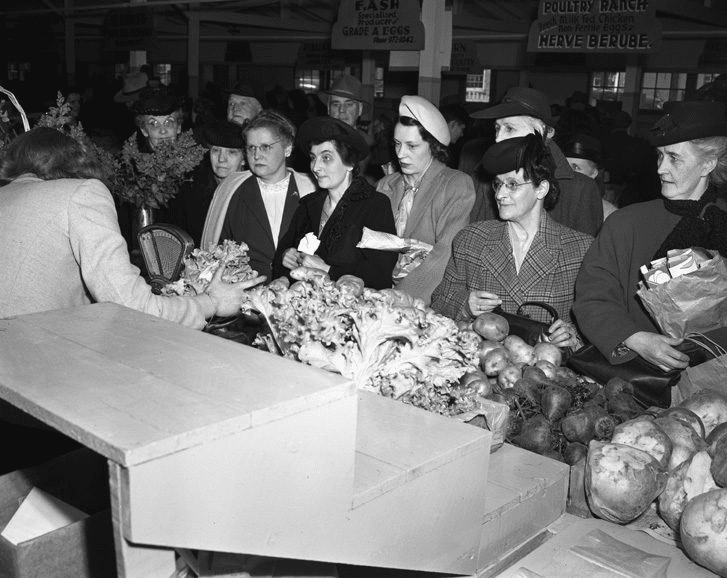
Edmonton’s black market grew in response to an influx of American workers arriving to build the Alaska Highway. American soldiers brought in large quantities of subsidized cigarettes, which were in short supply in Canada. Local civilians quickly established networks to trade with them.
Due to high demand, the prices of smuggled cigarettes skyrocketed, and Edmontonians were willing to pay extra just to secure a few packs. However, the WPTB remained vigilant. In 1945, authorities arrested two Edmonton residents, George Clydesdale and Bruce Laidlaw, for illegally storing American cigarettes. They were each fined $50, and their contraband cigarettes were confiscated.
A few days later, the WPTB arrested two American traders selling cigarettes, tea, butter, gasoline, and other goods on the black market. These men had purchased items using the names of American companies operating in Edmonton, then resold them to pedestrians and small retailers across the city.
While food and cigarettes were the most commonly traded goods, tires, automobiles, and heavy machinery were also in high demand on Edmonton’s black market. This surge in illegal trade led to an increase in thefts, as people sought quick profits.
One Edmonton man sold his car for $700, but in the official sales documents, the dealer only reported $400, effectively evading WPTB price controls.
Another resident left work to find that two of his tires had been stolen from his parked car. Tire thefts became so frequent that the WPTB published newspaper announcements, urging people to record their tire serial numbers to prevent resale on the black market.
Due to wartime shortages, even housing became a black market commodity in Edmonton. The WPTB enforced strict rent controls and required all landlords to register their properties. However, many exploited the housing shortage, creating an underground rental market.
After the war ended, almost all black market activity in Edmonton disappeared. With wartime restrictions lifted, legal trade resumed, and rationing controls were abolished, restoring normal economic conditions.